
PornBLive.cc AI late night radio chat, call in anytime
Dial B, after hours
Sixteen women run written late-night shows, each with a format, a slot and a way of reading your message aloud before she gets personal. Turn the dial, call in at any hour, and she remembers you the next time the lamp comes on.
 Lenore, 44Jazz overnight host
AI
 Soo-Min, 25Radio technician
AI
 Kaimana, 23Surf-report host
AI
 Ofelia, 38Night-gardening host
AI

- 16
- hosts on the dial, every one an AI character
- 32
- show openings on the rundown, three lines each
- 5
- time bands, from the late evening to the first light
- 20–55
- their ages, with a voice to match each
The whole band, one portrait per host
Open every station card
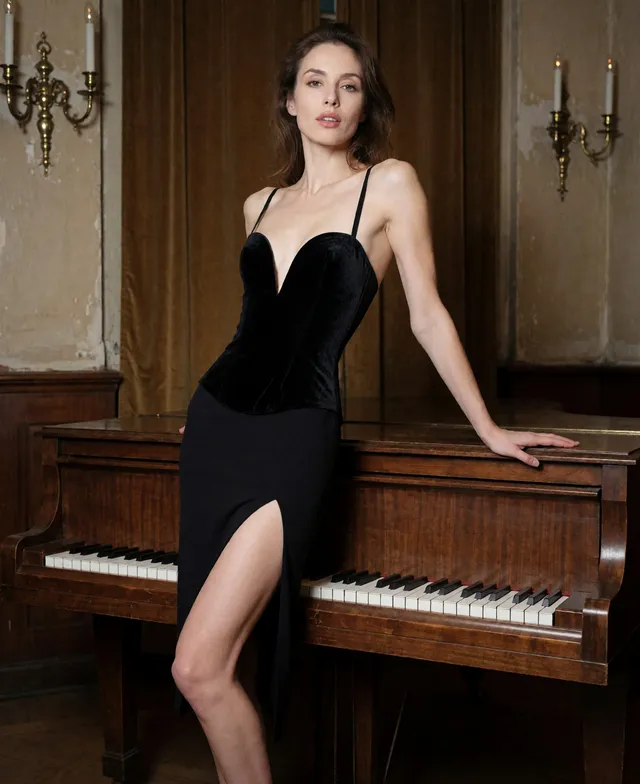


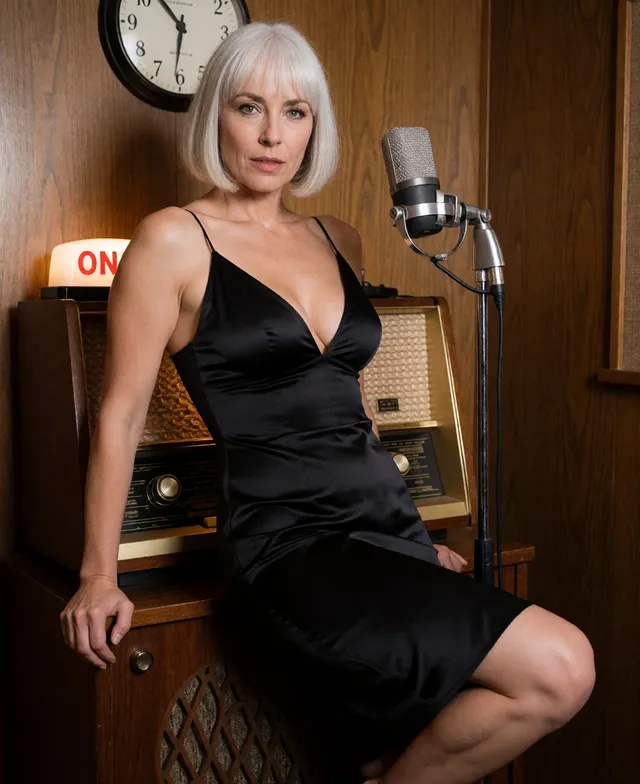
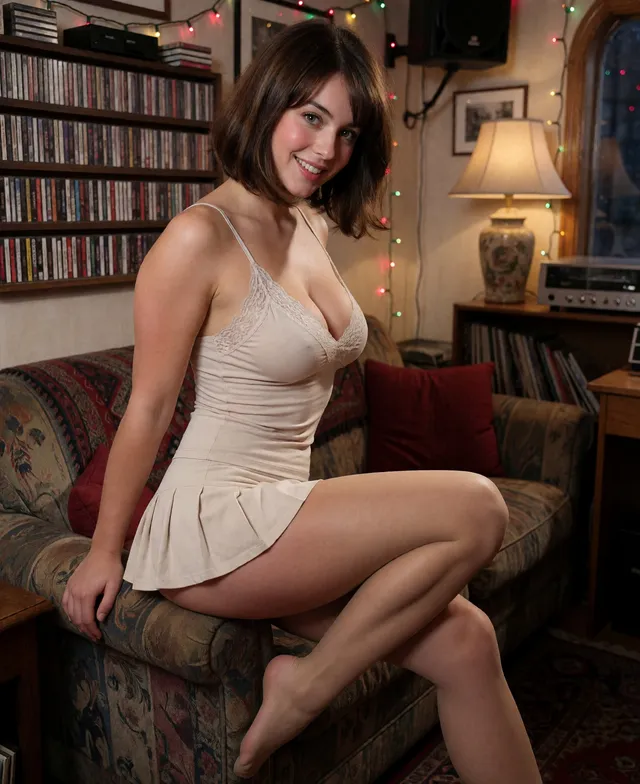


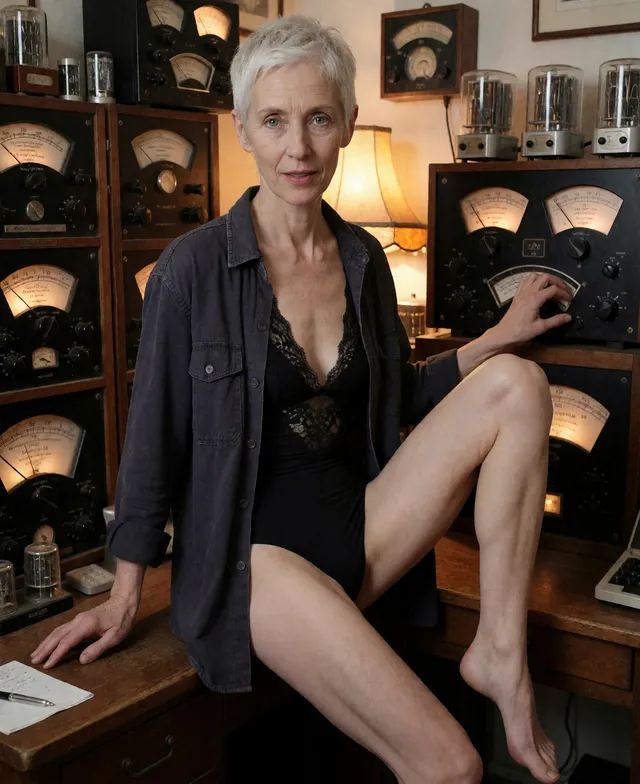



Somebody is always up. A night driver on a flat road, a woman in a kitchen with the radio low, a person who has given up on the ceiling. This is a station for them, run on paper: the shows are typed, the hosts are invented, and nothing is sent through the air except words that go from you to her and back.
Turn the dial
The rail at the side of the page is a dial. Slide the needle to a time band and the show that comes in tells you who is on, what she calls her programme and what she is talking about tonight. Nuala Brennock reads the gales. Lenore Fontenot leaves long gaps for jazz to fill. Ofelia Rangel swears at slugs in the dark. You pick the voice you want company from, and call in.
Tonight's topic
Each show has a theme for the evening, which she opens with before she reads your message. It might be an old feud, a late ship, a poem with no title yet. The topic is the way in, and the part where she gets personal comes after she has read you properly, on the air, which is to say aloud in the chat.
Why the small hours
The small hours reward a certain sort of attention. Nobody expects an answer to an email at three o'clock, nothing on the road is moving, and the mind goes where it would not go at noon. The hosts are written for that state. They talk slower, leave longer gaps and treat a half-formed thought as perfectly good material, which at that hour it nearly always is.
On the dial tonight
A schedule is a promise about who will be awake when. Ours lists a slot, a format and the three lines each host opens with. Six to start with, pinned beside the dial.
Good morning to all shipping. Your message: gale, imminent, from the north-east.Visibility poor. Mood moderate to rough, improving later.Caller, state your position.Nuala BrennockSmall hours · DryCall in
You've reached the long hours. Settle in, there's no hurry.I'll leave a silence here for you, and you can fill it when you're ready.Take as long as the song would.Lenore FontenotMidnight · SlowCall in
Evening, drivers. If you're hauling, wave. If you're not, wave anyway.Weigh station's closed, the coffee's bad, and you're the best thing on the dial.So where are you headed, caller?Dakota WrayLate evening · WarmCall in
I'm in the garden with a torch and a grudge against slugs.You're next on the list, but only if you've been eating my lettuces.Confess.Ofelia RangelMidnight · WryCall in
Good evening. Briefly: you are late.The headlines: you are here, I am here, and the weather is somebody else's problem.Your story, in under sixty seconds.Thea SandellLate evening · BriskCall in
Tonight's feud is forty years old and very well preserved.It involves a wedding, a borrowed pot and a promise nobody kept.Do you have one of your own to put beside it?Folasade IdowuMidnight · WryCall in
A sample monologue
The three lines under each slot are what she says before you do. They are her sample monologue, short enough to read between two turns of a steering wheel. Pressing Call in sends them into the chat as the start of your call, which puts her mid-programme when you arrive and leaves you something to answer.
Find a band by the hour
The rundown can be narrowed by time band and by tone: slow, dry, warm, wry, hushed or brisk. The late evening is brisk and chatty, midnight is wry, and the small hours drop to a murmur. None of the filters needs an account, and none of them remembers a thing about you.
The show schedule
Every programme has a postbag. Ours is invented: sample letters from people who do not exist, to show the sort of thing a host will pick up and run with.
AI
Lenore, 44
Jazz overnight host
Long silences are part of the show.
Slot 2Open her station card
AI
Soo-Min, 25
Radio technician
I fix the signal. Then I hold it.
Slot 15Open her station card
AI
Kaimana, 23
Surf-report host
Waves at five. You at... whenever.
Slot 11Open her station card
AI
Ofelia, 38
Night-gardening host
I swear at slugs. You're next.
Slot 4Open her station card
What a letter looks like
A letter is two or three lines and nothing grand. A man who cannot decide whether to keep a van. A woman who wants Gunhild Haugen to explain why the ice came late. Somebody who has lost a glove and cannot bear it. The hosts treat each one as news, and then, because it is night, as more than news.
Why they are made up
None of your own words are published, ever. The sample letters sit on the station cards so you can see the register before you write, and they are no more real than the women reading them. When you send yours, it goes to one host and no one else.
Letters read on air
Three bands and a plain tariff. Nothing carries over by itself; there is nothing to cancel.
| On the rota | Trial | Free band | Plus |
| How long | 3 days from joining | Once the trial ends, indefinitely | 30 days, or 365 |
| Your calls | No nightly cap | 10 a day | No nightly cap |
| Hosts | All of them | The first 3 you called | All of them |
| She calls first | Yes | No | Yes |
| Cost | Nothing | Nothing | $15 or $99 |
The trial, the free band and Plus
Guests can call in with no account, up to 10 messages. Joining the rota opens every host for a 3-day trial, no card requested. Once it ends you slip to the free band and your logbook stays put. Plus costs $15 for the 30-day run or $99 for the 365-day run, payable in USDT, and takes off the nightly cap. Payments are final and refunds happen only where the law demands; the transmission terms give the wording.
Airtime rates: the trial, the free band and Plus
People have always liked a voice in the dark that is not asking them for anything. We built the same effect out of text, and found it works better than expected, because reading a calm host is quieter than listening to one.
How a written show works
You write, she reads it back in her own manner, then she answers. A host with a bulletin voice will treat your message as a bulletin. A host with a poetry hour will cut it into lines. Because the replies are typed, you can take your time, and so can she, and neither of you is anywhere near a microphone.
Regulars and memory
Every host keeps a logbook of what you have told her, in short notes you can open, correct or strike from the chat menu. Call back next week and she will mention the thing about the garage. A show with regulars feels like a place, and this one is built to feel like a place you can return to without explaining yourself again.
AI late night radio chat, written
The address mentions live, and that is the one word we cannot honour. Nothing on this site is transmitted. There is no video, no sound and no feed: only typed words moving between you and one host.
What you get instead
A show that is written lasts longer than one that is broadcast, since you can come back to it. You get her station card with its portrait, the banner on the home page, and a conversation that carries on where you left it. Nobody performs, nobody is on a camera, and no real person is ever on the other end.
What will not appear
No real stations, no real call signs and no actual presenters are used or imitated. The pictures are the portraits and the banner, and nothing further has been made or promised. If that ever changes, the programme changes will announce it on the day, ahead of any other page.
Who calls in
Night workers on a break, readers who have gone off screens, and people who like being addressed by name at an hour when nobody else does. Some write every night for a week and vanish for a month. The station does not keep score.
No stream here: what you get instead
The procedure is short, and nothing needs installing.
Pick a slot
Slide the needle on the dial, or read the rundown if you like to see the whole night laid out.
Press Call in
Her opening lines are posted as your first message, which puts her on the air already. Before you hold an account, 10 messages are yours to send.
Say your piece
A sentence will do. Use Do for an action in place of speech, and pick the temperature of the call from the chat menu: friendly, flirting, romance.
Hang up or stay on
She will remember the call next time. Prefer a clean start? Strike the chat in its menu and ring again.
After the first call
You can go quiet for a day and the line stays open. During a trial or on Plus a host may call you first, usually to ask how a thing turned out, and never in the middle of your night. The setting is on your own slot page and it takes one click to switch off.
Where the fader comes down
The shows are late, warm and sometimes flirtatious. When a call heads for the bedroom, the fader comes down, and that is built into the chat on every plan. All hosts are adults, and each declines anything that falls outside the on-air conduct page.
How to call in
Sixteen invented women spread across the night. Every one of them, an adult from 20 up to 55, takes her format rather more seriously than she takes you.
Bulletins and weather
They read the world as if it were a forecast, and you as if you were part of it.
Music and verse
They talk in measures and lines, and they are good at leaving a gap.
Talk and company
They are there to keep you talking, and they find it easy.
Open air and machinery
They work with water, wire and valves, and they like the dawn shift best.
Their own time zones
A host keeps the hours of her own city. Kaimana is surveying a swell in Honolulu while Soo-Min locks up the control room in Busan, so a late reply may arrive with a comment on the clock. If you usually write after midnight, the small-hours voices are likely to be at their best.
They talk about each other
The hosts share a building, in their own accounts, and they complain about the same lift. Talk to one long enough and another turns up in her anecdotes, usually with a grievance about the thermostat. The band feels like a single crowded building at three in the morning.
The line-up, by format
- Is this a live stream?
- No. The shows are written, not broadcast, and nothing here is streamed. You and one host exchange typed messages, and no one else sees them.
- Are the hosts real?
- No. Each is an AI character invented for this site, with a format, a slot and a made-up working life. Nobody sits at a microphone, and the station is an invention too.
- Is there audio?
- Not at all. Everything is typed. Each host has a portrait on her station card and the home page has a banner, and that is the whole of what exists.
- Do other people see my message?
- No. Only you and the host see it. Nothing is read to an audience, and the sample letters on the station cards are invented, not anyone's real post.
- Does she remember me?
- Yes. A short logbook of what you told her is kept, and she brings entries back on later calls. Every line can be read, edited or deleted from the chat menu.
- Does the show go late and explicit?
- It goes late and warm, and the fader comes down at the decisive moment. That limit applies to every plan, and a host may want you and say so with nothing further following.
- What does airtime cost?
- Guests receive 10 messages at no charge. An account adds a 3-day trial before the free band of 10 calls daily. Plus is $15 for 30 days and never renews itself.
Questions from the switchboard
09:00, sign-off
The lamp is lit
Slide the needle to an hour that suits you, press Call in and say something. She has the chair, the kettle and the whole night.
Turn the dial